The design proposal for the Anaheim Regional Transportation Intermodal Center (ARTIC), which will be the southern terminus of the HSR route (at least until the San Diego line is built), was released recently. The image above is of the station, which will be wedged in between the Santa Ana River and the 57 freeway just across from Angels Stadium and the Honda Center (formerly The Pond). HOK Los Angeles and Parsons Brinkerhoff are the designers and builders for the ARTIC project. According to the release, the building will be of a sustainable design and will aim to receive a LEED Platinum certification, currently the highest rating for sustainable building.
The release also notes that the ARTIC design is modeled in part on the blimp hangars at the old MCAS Tustin. Which I have to say I find a bit unusual and not exactly inspiring. I never really understood the attraction some people had to the blimp hangars (the hangars at Moffett Field in Sunnyvale are exact copies of the Tustin hangars, for you Bay Area folks). Having grown up in Tustin, and having had several opportunities to take extensive tours of the hangars, I always thought they looked like rather ugly blights on the landscape that should have been torn down once the Marine Corps and US Navy stopped using blimps in the 1950s. (Apparently the hangars made good storage space for helicopters, which is why they were preserved.)
One of my favorite train stations is located just down the road in Santa Ana. I'm a sucker for the Mission Revival style, and that would seem to be more fitting for an Orange County HSR station. The Old Orange County Courthouse, which isn't Mission Revival but is still a great bit of 19th century architecture, would also make a good basis for ARTIC. At minimum there should be some orange trees around the station, to mark Anaheim's history and especially given how few orange trees are actually left in the county.
These criticisms should not be taken as a criticism of the ARTIC project itself. It's a long overdue and welcome project to improve the woefully inadequate existing Anaheim station (located in the parking lot of Angels Stadium), providing a centrally located place for trains, buses and pedestrians to meet.
OCTA is hosting a scoping meeting for ARTIC next Thursday, July 30, from 5 to 7 pm at OCTA HQ on 600 S. Main Street in Orange. You can submit comments online if you can't attend the meeting in-person.
Wednesday, July 22, 2009
ARTIC Designs Unveiled


Friday, June 26, 2009
HSR and Historic Stations
by Rafael ?
?
In a recent post, Yonah Freemark and Jebediah Reed over at the Infrastructurist lament the loss of 11 once-famous landmark grand stations around the country to strictly utilitarian underground platforms, arenas, office towers, strip malls, highways and parking lots. Case in point: Penn Station in NYC.
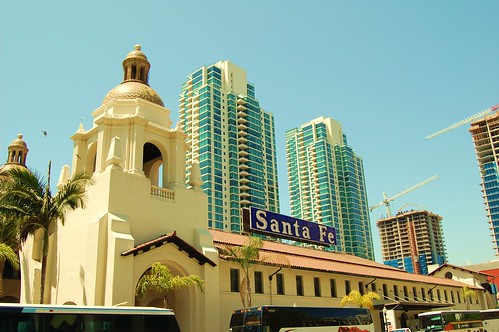
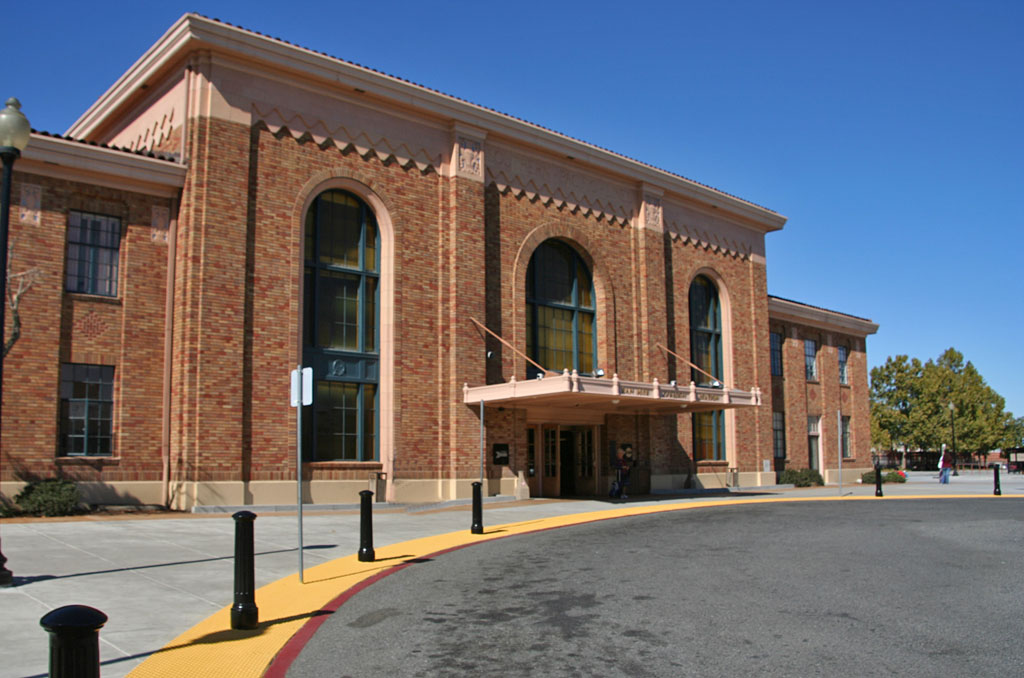
Fortunately, California has managed to preserve at least some of its own railroad history in the shape of historic passenger stations, e.g. LA Union Station, San Diego Santa Fe Depot, Sacramento's Depot, San Jose's Cahill Street (aka Diridon) station and many smaller ones as well. Built in the age of steam, before freeways, buses and private cars even existed, these buildings remind Californians of the importance of railways in their own history.
Now that state voters have approved $9.95 billion in GO bonds to kick-start a rail renaissance, visions of brand-new, ultra-modern stations have become the centerpieces of urban planners' ambitious plans to revitalize city centers and make using public transportation attractive again to a population that has become hooked on gas-guzzling cars. For practical reasons, many of these stations will feature run-through tracks, electronic displays and other aspects of modern rail technology. In particular, the 19th century notion of maintaining waiting rooms separate from the platforms makes little practical sense in the fast-paced 21st century, in which trains run very frequently and on time with just a minute or two of dwell time.
Should California's historic passenger rail stations
- remain in daily use for the sake of continuity in spite of the associated passenger flow inefficiencies plus wear and tear,
- be preserved in-situ as museums of a bygone age or,
- be carefully relocated elsewhere for the sake of maximum convenience for passengers at the new transit hubs?
Note: SF's Transbay Terminal is arguably a special case in that it was a station for electric trolleys, then a bus depot and now slated for wholesale replacement to meet seismic code. Since we've already covered the SFTT ad nauseam, I'd like to keep the focus on the issue of architectural/cultural heritage vs. utility where above-ground structures are expected to be preserved. Discussion of what you'd like to see happen at Caltrain's 4th & King property after electrification is of course fair game.